
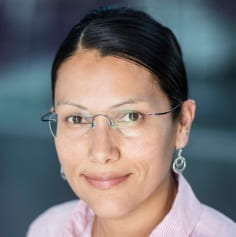
Dr Karina Rodriguez Echavarria, Professor of Visual Computing, University of Brighton
Karina is a Professor of Visual Computing at the School of Architecture, Technology and Engineering, University of Brighton. Karina is an interdisciplinary researcher, with a background in Computer Science, a PhD in knowledge-based engineering and an MA in Histories and Cultures. Her research interests include the development and application of computing technologies for the digitisation of objects and environments; the information management, analysis, search/browse visualisation of visual representations, including 2D and 3D content; as well as their physical reproduction using digital fabrication. A focus of the research is the Cultural Heritage (CH) sector and its related applications such as creative applications, art, culture, education and tourism. She has produced research outputs in interdisciplinary areas such as computer graphics, information and knowledge management as well as cultural heritage.
Karina co-leads the Computing and Mathematical Sciences Research Excellence Group which focuses on both theoretical and practical research in computer science challenges related to software systems, leading on the provision of digitisation and visualisation technologies. She is the Editor-in-Chief of the ACM Journal of Computing and Cultural Heritage, and chairs the Eurographics Workshops Board and the Eurographics Steering Committee on Graphics and Cultural Heritage which organises yearly workshops in this area.
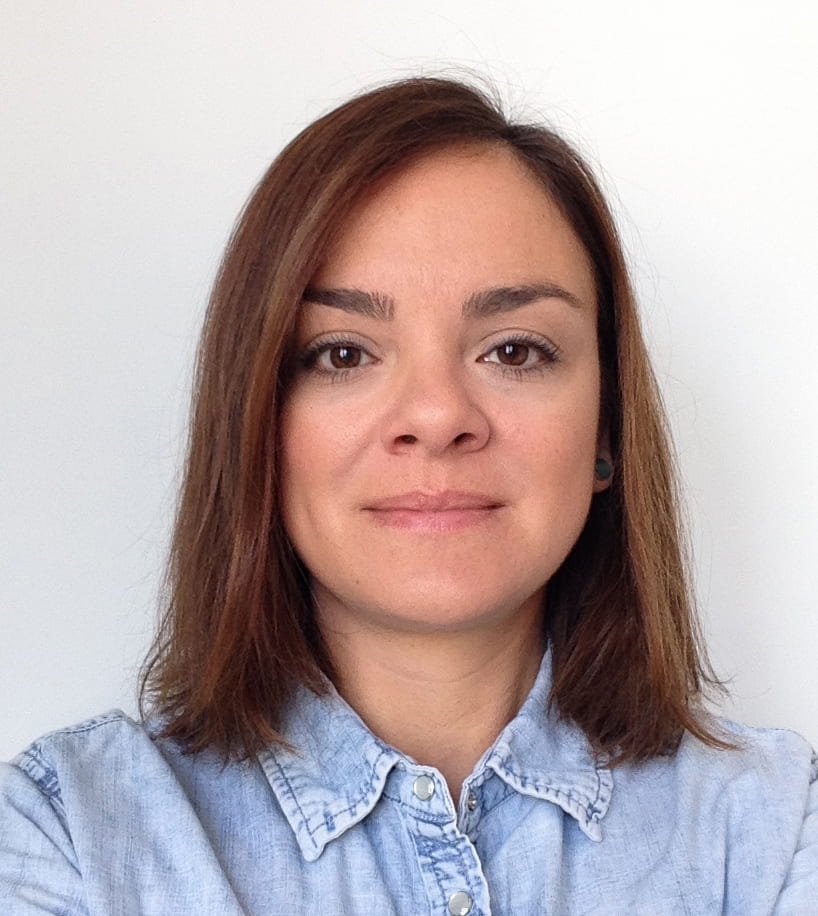
Dr Myrsini Samaroudi, Research Fellow, University of Brighton
Myrsini Samaroudi has a background in archaeology and digital humanities, holds a PhD from the School of Architecture, Technology and Engineering of the University of Brighton and is a member of the Computing and Mathematical Sciences Research Excellence Group of the same university. Myrsini has worked as an archaeologist and as an interdisciplinary researcher both in academia and industry. Her PhD, held in collaboration with the Royal Pavilion & Museums Trust, examined digitally fabricated replicas of museum artefacts as interpretative “devices” and proposed a framework for their integration and evaluation within experiences for different audience groups. Over the last few years, Myrsini has worked on various research projects, investigating creative and technology-facilitated methods to improve children’s wellbeing; the impact of Covid-19 on heritage institutions; the use of 3D printed replicas and digital 3D-games to enhance museum interpretation; digital technologies for documenting and accessing intangible heritage knowledge; and more recently the requirements of the Arts and Humanities research community in the UK with respect to infrastructure as well as digital skills to effectively manage complex visual data for research.
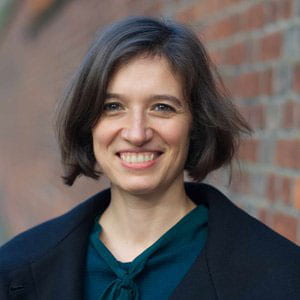
Dr Arianna Ciula, Director and Principal Research Software Analyst, King’s College London
Arianna has over 20 years’ experience in collaborative Digital Humanities (DH) research, and 15 years’ experience in research management, and digital research infrastructures (inclusive of research policy strategy and implementation). She is an active member of the Research Software Engineers (RSE) and DH national and international communities; she researches and advocates for a holistic understanding of digital infrastructures and of modelling processes of cultural-historical objects and phenomena for the application of computational methods. Her personal research interests focus on modelling processes (from data modelling to design and analysis). She lectured and published on humanities computing, in particular on digital manuscript studies and editing; she has organised conferences and workshops in digital humanities, and is an active member of its international community. She holds a PhD in Manuscript and Book Studies (digital palaeography, University of Siena), an MA in Applied Computing in the Humanities (King’s College London) and a BA Hons in Communication sciences (computational linguistics, University of Siena).
She worked at King’s in the past as Research Associate (Centre for Computing in the Humanities, 2003-2009). From 2009 to 2012, she worked as Science officer at the European Science Foundation (Humanities) where her primary responsibilities included the supervision of instruments to fund collaborative research in the humanities and the coordination of strategic activities. From 2013 she worked as Research Facilitator at the University of Roehampton for three years, where she expanded the research funding portfolio and supported research strategies across the Humanities and beyond. She was appointed Director of KDL in 2022.
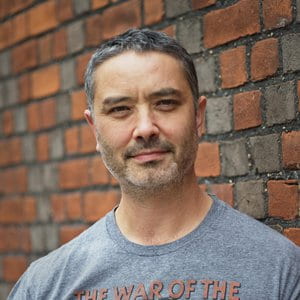
Neil Jakeman, Senior Research Software Analyst, King’s College London
Neil came to the Department of Digital Humanities at King’s College London as a Research Developer in 2011 to help steer development in the spatial turn that DH research that was enjoying at that time. Arriving with a background in environmental analysis, spatial statistics, his interests within the department broadened to encompass the diversity of topics in the department’s portfolio. Neil has led technical development on a number of projects, including collaborating with the University of Wales to create a database of archaeological and palaeo-linguistic evidence regarding the origin of the Celtic language in the Bronze Age. He created a text and manuscript comparison tool for the study of vectors of transmission of medieval French. His role within the Lab has now evolved to encompass cultivating new projects and relationships in the digital community and beyond as a Project Analyst. As one of three permanent analysts in the Lab, Neil oversees has particular responsibility over those which involve digital creative practice in emerging technologies such AR, VR and real-time engines. He is an accomplished 3D modeler, photographer and, occasionally, guitar player.

Matt Penn, Head of Scientific Computing Infrastructure, King’s College London
Matt leads the team that develops and operates e-Research compute platforms. Prior to e-Research, he managed the computing team in the Faculty of Natural, Mathematical and Engineering Sciences. Prior to King’s he worked in various systems roles at the hedge fund D. E. Shaw and then led the Technology Operations group at a FinTech spin-out Arcesium. Matt studied BSc at King’s in Mathematics and Computer Science and has an MSc from UCL in Data Communications, Networks and Distributed Systems.